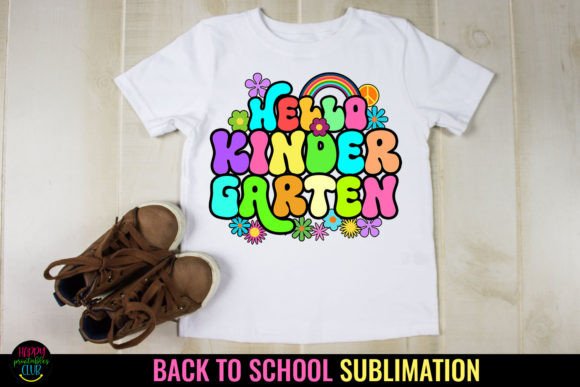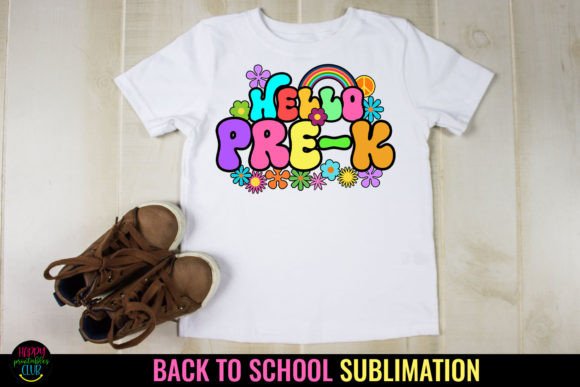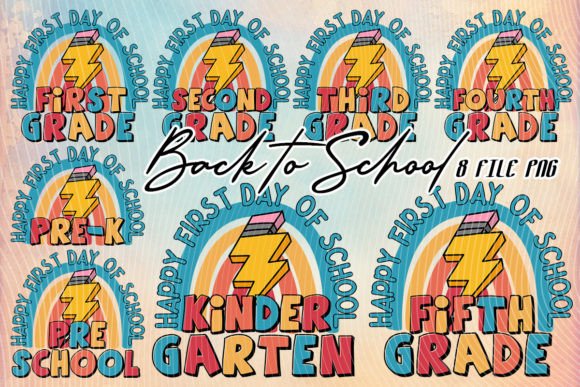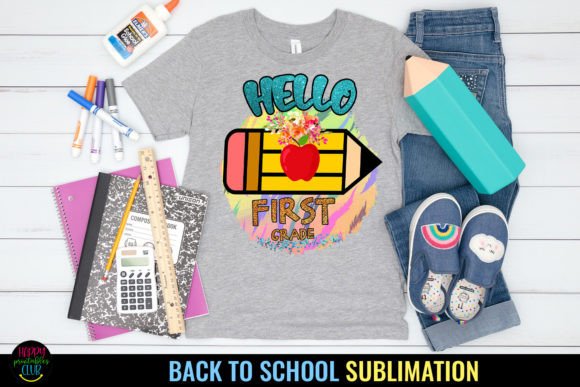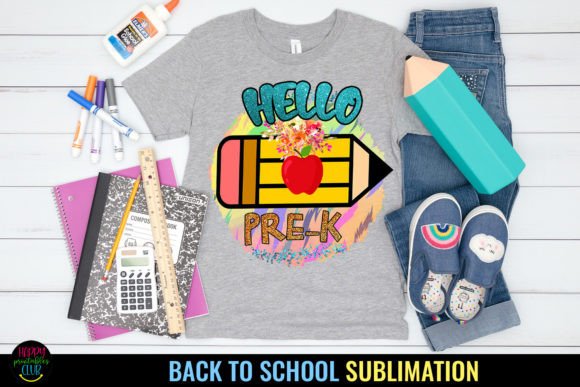
Hello Pre-K I First Day School Shirt PNG
If you're designing custom back-to-school gear—whether for your own child’s milestone, a preschool program, a boutique shop, or a print-on-demand store—you’ve likely searched for “Hello Pre-K I First Day School Shirt PNG.” This clean, cheerful design is popular for good reason: it’s age-appropriate, warm, and instantly communicates excitement and new beginnings. But not all PNG files deliver what they promise—and using the wrong one can cost time, money, and credibility.
What You’re Actually Getting (and What You’re Not)
This particular Hello Pre-K I First Day School Shirt PNG comes as a digital download: a single high-resolution PNG file (12 x 12 inches at 300 DPI), delivered in a ZIP folder. That resolution makes it suitable for printing on t-shirts, tote bags, mugs, tumblers, notebooks, journals, invitations, and more—provided you understand how to prepare it for your specific use case.
What’s important to recognize upfront: this is not a physical product. Nothing ships. You won’t receive a printed shirt, a vinyl cut file, or layered PSD source files. It’s a ready-to-use raster image—optimized for sublimation, screen printing, or DTG—but only if your workflow supports it.
Common Missteps—and Why They Matter
Many buyers assume “PNG” means plug-and-play compatibility across all platforms and printers. That’s rarely true. Here’s where things go sideways:
- Mistaking transparency for universal readiness: Yes, this Hello Pre-K I First Day School Shirt PNG has a transparent background—but some cutting machines or sublimation software default to white backgrounds unless explicitly told otherwise. If you skip checking layer visibility or export settings, your final print may show an unwanted white box around the text and icon.
- Overlooking color accuracy expectations: The listing notes that colors may vary depending on screen resolution—and that’s not just fine print. Monitors render RGB differently; sublimation inks shift on polyester; DTG prints behave uniquely on cotton blends. A vibrant blue on your laptop might appear muted on a ceramic mug. Always soft-proof with your printer’s ICC profile when possible—or order a test print before bulk production.
- Assuming software support is included: The designer clearly states they provide no technical help with software like Cricut Design Space, Silhouette Studio, Photoshop, or Sawgrass Print Manager. Yet many first-time buyers purchase expecting step-by-step guidance on resizing, converting to vector, or adjusting bleed margins. That mismatch leads to frustration—not because the file is flawed, but because expectations weren’t aligned.
- Skipping equipment verification: Sublimation requires specific hardware (a sublimation printer, heat press, and coated blanks). Using this PNG on a standard inkjet printer and ironing it onto a plain cotton tee will yield blurry, faded results—not because the file is low quality, but because the process doesn’t match the output format.
How to Use This File Smartly—Without Wasting Time or Materials
You don’t need advanced design skills to succeed—but you do need intentionality. Start by asking three questions before downloading or printing:
- What’s my end use? If you’re making shirts for a Pre-K orientation event, confirm whether your printer uses DTG, sublimation, or screen printing—and adjust file prep accordingly. For sublimation, keep the design within safe margins (usually 0.25"–0.5" from edges) and avoid thin lines under 2 pt weight—they’ll vanish during transfer.
- Do I have the right tools to open and scale it? This PNG opens in any image viewer, but editing demands software that handles high-DPI files without resampling. Free options like Photopea work well for basic adjustments; GIMP offers more control. Avoid dragging the file into Word or Canva at full size—those platforms often compress or distort resolution.
- Is my blank compatible? Sublimation only works reliably on polymer-coated or 100% polyester items. Printing this Hello Pre-K I First Day School Shirt PNG on an uncoated ceramic mug? It’ll wipe off. On a 50/50 blend t-shirt? Colors will fade fast in the wash. Match the file to the substrate—or choose a different decoration method entirely.
Better Alternatives When This File Isn’t the Right Fit
Not every project needs a pre-made PNG. Consider these alternatives if your goals include:
- Customization per child: Instead of one static design, use a template-based tool (like Placeit or Canva) to auto-generate names or class years. That adds personalization without manual edits.
- Cutting machine projects: If you’re using a Cricut or Silhouette for iron-on vinyl, ask the seller if they offer a vector version (SVG or EPS). Raster PNGs don’t cut cleanly at small sizes—and scaling up introduces pixelation.
- Brand consistency: If you’re representing a school or business, a custom-designed logo or wordmark (with matching fonts and color palette) builds trust faster than a generic “Hello Pre-K” phrase—even if it costs slightly more upfront.
A Final Note on Value and Realistic Expectations
This Hello Pre-K I First Day School Shirt PNG delivers exactly what it promises: a polished, classroom-friendly graphic optimized for digital production. Its value lies in speed, clarity, and emotional resonance—not complexity or customization. Treat it like a reliable ingredient, not a finished meal.
Before purchasing, verify your software, hardware, and materials. Test one item first. Review the file in your actual workflow—not just in preview mode. And remember: great design starts with understanding context, not just copying pixels.
When used intentionally, this file helps educators welcome students warmly, parents commemorate milestones meaningfully, and small businesses launch seasonal collections efficiently. It’s not magic—but paired with thoughtful preparation, it’s quietly powerful.