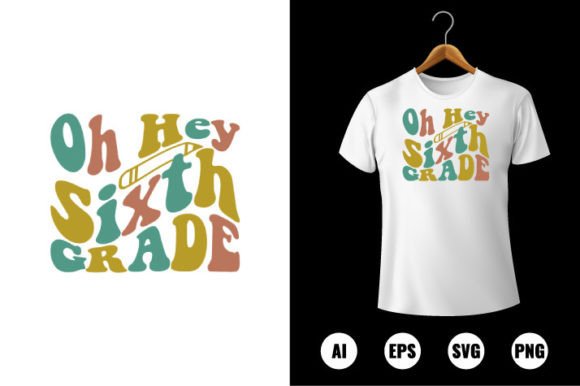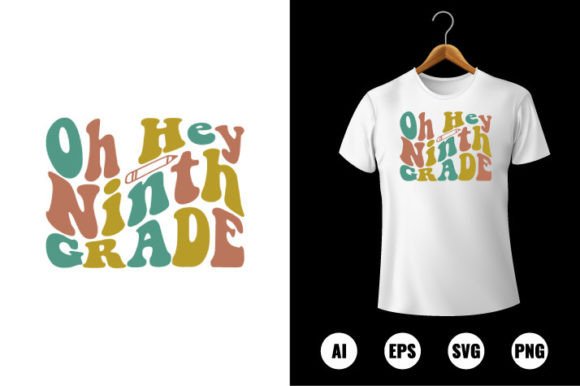
Oh Hey 9th Grade T-shirt Design: A Practical Guide for Educators, Parents, and DIY Creators
The Oh Hey 9th Grade T-shirt Design is a back-to-school digital clip art resource built for flexibility—not flash. It’s not just a graphic; it’s a production-ready toolkit designed for real-world application across apparel, crafts, and classroom projects. Unlike generic school-themed vectors or low-resolution PNGs found on free asset sites, this design delivers professional-grade vector files with intentional versatility: AI, EPS, SVG, and high-DPI PNG formats, all fully editable and scalable without quality loss.
What Sets This Design Apart from Other Back-to-School Graphics
Most back-to-school clip art falls into one of two categories: overly playful (cartoon mascots, exaggerated fonts) or overly formal (institutional logos, serif-heavy typography). The Oh Hey 9th Grade T-shirt Design occupies a deliberate middle ground—friendly but grounded, youthful but not childish. Its tone strikes a balance that resonates with incoming freshmen and the adults supporting them: teachers planning orientation events, PTA members organizing spirit days, or parents coordinating class shirts.
Crucially, it’s engineered for use—not just display. Every element is built as a vector shape, meaning text, icons, and layout components can be individually selected, recolored, resized, or rearranged in Adobe Illustrator CC or compatible software. That level of control matters when adapting a single design across multiple applications: printing on cotton tees, cutting vinyl for stickers, engraving on wood plaques, or layering onto scrapbook pages. The 300 DPI resolution ensures crisp output whether printed at 8 inches wide on a t-shirt or scaled down to 2 inches for a badge.
How File Formats Influence Real-World Use Cases
Not all file types serve the same purpose—and understanding the tradeoffs helps avoid wasted time or rework. The Oh Hey 9th Grade T-shirt Design includes four key formats:
- AI and EPS: Native Illustrator and cross-platform vector formats ideal for commercial printers or screen-print shops requiring editable layers and Pantone color support.
- SVG: Web-optimized and compatible with Cricut, Silhouette, and other craft-cutting machines—especially useful for educators making classroom decorations or students creating personal accessories.
- PNG: High-resolution raster format with transparent background, suitable for quick mockups, digital presentations, or platforms that don’t accept vector uploads (e.g., some print-on-demand services).
If your goal is bulk t-shirt printing through a local shop, AI or EPS will give you the cleanest separation between colors and easiest path to color matching. For home-based crafting using a cutting machine, SVG is often the most practical starting point. PNG works well for social media announcements or printable handouts—but shouldn’t be used for large-format physical prints where scaling would degrade edges.
Editing Flexibility vs. Design Consistency
The claim “100 color changeable” isn’t marketing jargon—it reflects how the design was constructed. Each shape (letters, stars, border elements) exists on its own layer or group, with no embedded gradients or raster effects that lock in appearance. You can shift the entire palette to match school colors, swap navy for maroon and gold for silver in under two minutes, or mute tones for a more subdued look appropriate for academic settings.
That said, flexibility requires basic familiarity with vector editing tools. Someone new to Illustrator may need 15–20 minutes to learn how to select grouped objects or adjust global swatches—whereas a seasoned designer could recolor and resize the full layout in under five. There’s no automated “theme switcher” or web-based editor included, so expectations around technical comfort should be realistic. If your workflow relies entirely on drag-and-drop online tools (like Canva), this design will require exporting to PNG first—which sacrifices some editability.
Comparing Use Scenarios: When This Fits—and When It Doesn’t
Consider the Oh Hey 9th Grade T-shirt Design a strong fit when:
- You’re coordinating a small-to-midsize group project—such as a homeroom shirt order, orientation welcome kit, or freshman mentorship initiative—and want consistency without outsourcing design work.
- You already own or have access to Adobe Illustrator CC (or Affinity Designer) and need a starting point that avoids copyright concerns or licensing restrictions tied to stock assets.
- Your output spans multiple mediums: e.g., t-shirts for students, canvas banners for hallway displays, and printable certificates—all needing the same visual identity but different sizing and formatting.
It becomes less optimal if:
- You need immediate, no-software-required customization—such as changing text to “Oh Hey 10th Grade” without opening any design app. While possible, it does require editing the vector file directly.
- Your priority is photorealistic imagery or complex textures (e.g., watercolor backgrounds, distressed typography), which fall outside the clean, scalable vector aesthetic this design embraces.
- You’re sourcing assets for a large district-wide campaign with strict brand governance—where centralized approval workflows or CMS-integrated templates may be required instead of standalone files.
Practical Integration Across Common Projects
In practice, users report applying the Oh Hey 9th Grade T-shirt Design across surprisingly diverse contexts. A middle school counselor used the SVG version to cut iron-on transfers for student welcome pouches—resizing the central phrase to fit 4×6 inch fabric panels. A homeschool co-op leader layered the PNG over custom photo collages in Google Slides to create printable “first day” cards. A small boutique screen printer imported the AI file into their RIP software, adjusted spacing for youth-sized garments, and ran a 50-piece run with three color variations—all within one afternoon.
These examples highlight a quiet strength: the design doesn’t force a single interpretation. Its modularity supports adaptation without demanding stylistic compromise. You’re not locked into a fixed composition—you’re given building blocks calibrated for cohesion.
Assessing Long-Term Value Beyond the First Use
Digital clip art purchases are rarely one-off transactions. The value compounds when files remain usable across years, grade levels, or related themes. Because the Oh Hey 9th Grade T-shirt Design uses neutral, scalable elements—not time-bound trends or overly specific references—it lends itself to iterative reuse. With minor edits, the same base layout can become “Oh Hey 10th Grade,” “Oh Hey Transfer Students,” or even “Oh Hey New Staff”—extending utility far beyond its original label.
Still, it’s worth noting what it doesn’t include: alternate layouts, font licenses for commercial redistribution, or pre-made mockup templates. Those aren’t shortcomings—they reflect scope boundaries. Users who need those extras typically layer in complementary resources rather than expect them bundled in.
Making an Informed Choice
Choosing the right back-to-school design resource hinges less on finding the “best” option and more on matching capabilities to constraints: your timeline, technical access, output requirements, and long-term goals. The Oh Hey 9th Grade T-shirt Design excels where precision, adaptability, and multi-format readiness matter most. It won’t replace a full branding consultation—but for educators, organizers, and makers who value clarity, control, and clean execution, it offers a grounded, practical foundation.