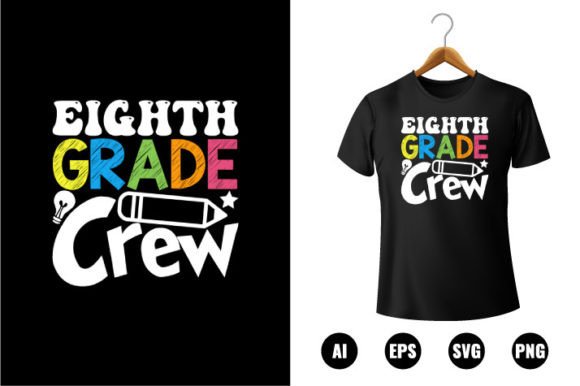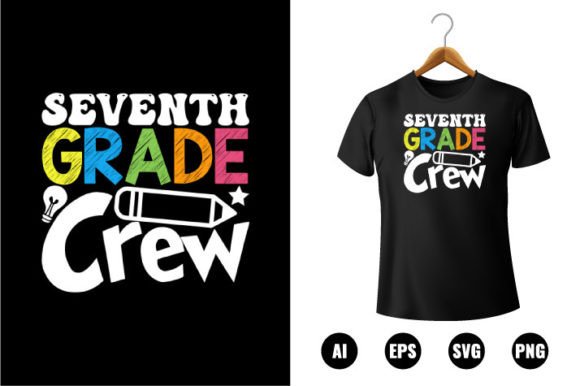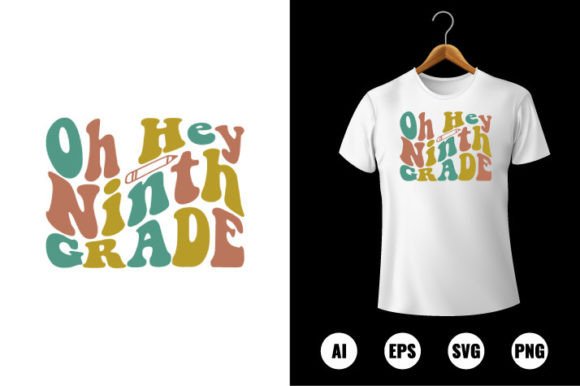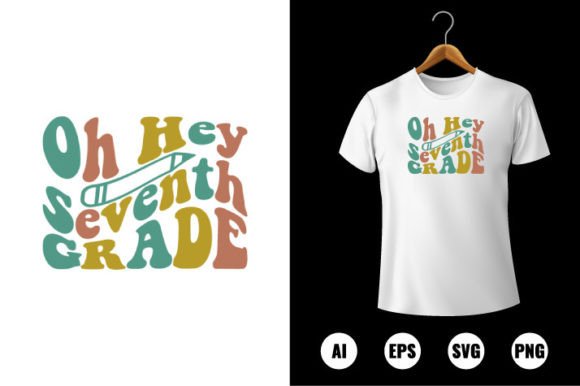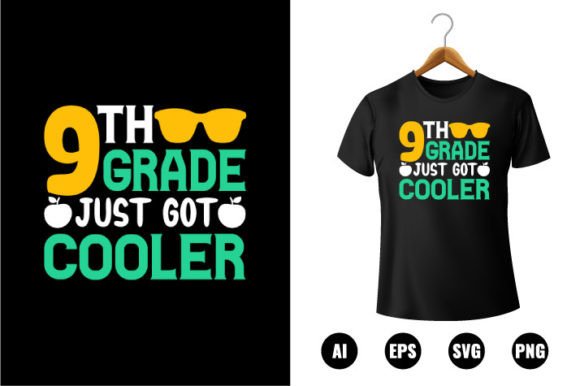
9th Grade Just Got Cooler T-shirt Design
Back to school season isn’t just about notebooks and schedules—it’s a strategic moment for creators, educators, small business owners, and marketers to align visual assets with real-world goals. The 9th Grade Just Got Cooler T-shirt Design is more than a playful phrase on fabric. It’s a production-ready digital asset engineered for flexibility, scalability, and seamless integration across multiple output channels—clothing printing, engraving, stickers, canvas art, scrapbooking, printable décor, and beyond.
This design belongs to a category of purpose-built clip art: not decorative filler, but functional vector resources that reduce friction in execution. Its value emerges not at the point of download—but during implementation: when you’re prepping for a school spirit campaign, launching a merch line for a tutoring startup, or designing classroom welcome kits for incoming freshmen.
How It Fits Into Real Workflows
For print-on-demand entrepreneurs, this file set arrives at the exact stage where time pressure meets technical precision. You don’t need to commission custom illustration or rework low-res graphics. Instead, you receive 100 print-ready files—in AI, EPS, PNG, and SVG formats—each built to Adobe Illustrator CC standards, at 300 DPI resolution, with full color control and vector-based scalability.
That means no pixelation when scaling from a 2-inch sticker to a 24-inch wall decal. No re-tracing when adjusting Pantone swatches for screen printing. No guesswork when exporting for DTG (direct-to-garment) printers or vinyl cutters. It’s designed to slot into your existing production pipeline—not disrupt it.
Preparation Is Built In
Before sending anything to print or cutting software, preparation determines outcome quality. This design delivers what seasoned users expect: editable layers, grouped vector shapes, and consistent stroke weights. All text is outlined, yet color values remain fully adjustable—so swapping navy for maroon (or adding school colors) takes seconds, not hours.
The 100 vector shapes are individually selectable and resizable without distortion. That matters if you’re adapting the design for different garment placements: center-chest prints require tighter composition; sleeve accents demand simplified outlines; tote bag versions benefit from expanded negative space. You’re not editing a flattened image—you’re refining intentional components.
Compatibility Across Tools and Teams
Because it ships in four core formats, interoperability isn’t assumed—it’s verified. AI and EPS ensure fidelity inside Adobe Creative Cloud workflows, especially for users managing brand libraries or batch-processing hundreds of SKUs. SVG supports web-based design tools like Cricut Design Space or Canva Pro—ideal for educators building classroom materials or hobbyists creating personalized back-to-school kits.
PNG files provide immediate utility for social media previews, email campaigns, or mockup generators—no vector knowledge required. They’re transparent-background, high-DPI, and sized for common preview ratios (e.g., 1080×1350 for Instagram feed posts). That lets marketing teams draft visuals while production finalizes print specs—parallel work, not sequential delay.
Real-World Use Cases
- Educators & School Staff: Embed the design into orientation handouts, welcome banners, or student ID badge holders—then reuse the same vector assets for digital newsletters or LMS dashboard headers.
- Small Business Owners: Pair it with local high school partnerships—offer co-branded apparel for freshman welcome events, then repurpose elements into window decals or café menu boards.
- Freelance Designers: Use it as a base layer in client projects—swap fonts, integrate mascot silhouettes, or combine with custom typography to deliver unique, on-brand variations without starting from scratch.
- Print Shop Operators: Load the AI file directly into RIP software. Adjust ink limits, add underbase layers, or apply halftone patterns—all within native vector context, preserving edge clarity.
Efficiency Without Compromise
“Easy to edit” isn’t marketing language here—it reflects structural choices. Paths are clean and minimal. Anchor points are optimized—not oversimplified, not overcomplicated. There are no embedded raster effects or ungrouped compound paths that break when resizing. That translates directly to fewer revision rounds, less troubleshooting during preflight, and faster turnaround between client feedback and final output.
Consistency also scales. If you’re producing for multiple grade levels—or expanding the series to include “10th Grade Just Leveled Up”—the underlying vector architecture supports systematic variation. Color palettes stay aligned. Stroke weights remain uniform. Typography hierarchy carries across iterations. That’s not accidental. It’s how professional-grade clip art supports long-term brand coherence, not one-off novelty.
Quality Control Starts With File Integrity
Each file passes three practical checks before delivery: resolution integrity (300 DPI at intended print size), color model accuracy (CMYK-ready with spot-color options), and vector cleanliness (no stray points, overlapping paths, or unexpanded blends). That means fewer surprises during press checks—and fewer last-minute fixes that eat into profit margins.
For educators integrating into lesson plans or classroom displays, the PNG and SVG versions offer plug-and-play reliability in Google Slides, PowerPoint, or Canva—no font substitution errors, no missing glyphs, no broken links. What you see in preview is what prints or renders—reducing cognitive load during prep time.
Long-Term Usability Considerations
Digital assets depreciate when they’re tied to outdated software or rigid dimensions. This design avoids that trap. Because it’s built in Illustrator CC and delivered in open-standard vector formats, it remains compatible with future updates—including upcoming AI-assisted vector refinement tools or cloud-based collaboration platforms.
It also supports versioning. Save your edited variants with clear naming conventions—e.g., 9thGrade_Cooler_SchoolBlue_AI_v2.ai—and store them alongside original files. That creates an auditable asset trail: useful for tax documentation, client handoffs, or internal process reviews.
And because all shapes are vector-based and fully separable, you can extract individual elements—like the “Cooler” badge icon or the stylized “9th” numeral—for use in other contexts: as watermark motifs, app interface icons, or even laser-cut wood signs for a school hallway display.
Integration Tips for Smooth Execution
- Start with your output method: If screen printing, prioritize the AI or EPS file and confirm PMS color builds with your printer. For vinyl cutting, use the SVG and simplify paths in your cutter software first.
- Test color shifts early: Convert to CMYK and soft-proof using your printer’s ICC profile—not just your monitor’s default rendering.
- Batch-edit smartly: Use Illustrator’s Global Colors or CC Libraries to update brand hues across multiple files at once—especially helpful if supporting several schools or programs.
- Document edits: Keep a simple changelog text file with each project folder—note date, color changes, sizing adjustments, and export settings used. That saves hours during reorders or audits.
The 9th Grade Just Got Cooler T-shirt Design doesn’t replace creative judgment—it sharpens it. It removes technical bottlenecks so you spend less time wrestling with file compatibility and more time solving for audience impact, brand alignment, or logistical efficiency. Whether you’re outfitting a freshman mentorship program, launching a youth-focused apparel line, or designing inclusive welcome materials for a diverse student body, this asset works where your process already lives—not where marketing copy says it should.
It’s ready when you are.