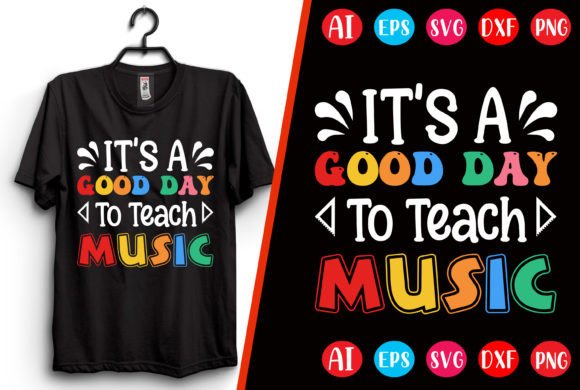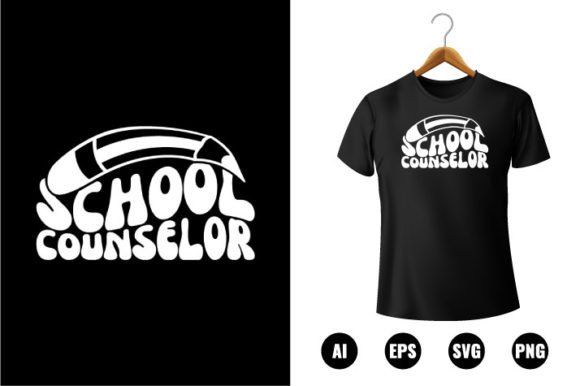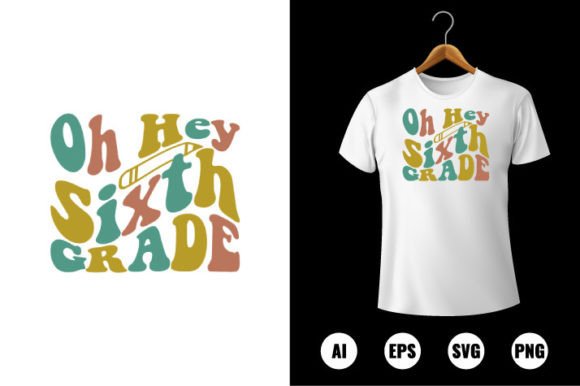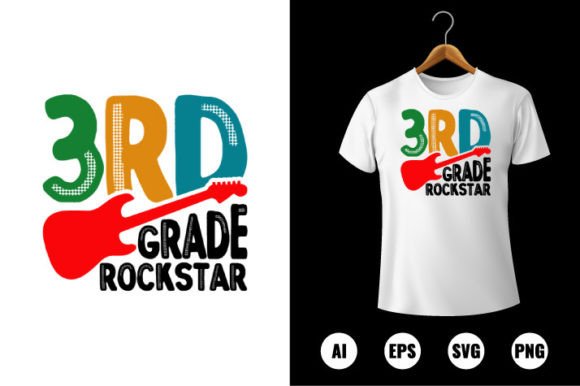
Back T0 School T-shirt Design: A Versatile, Print-Ready Asset for Educators, Creators, and Small Businesses
When planning seasonal merchandise—especially around the annual academic reset—Back T0 School T-shirt Design stands out not just as a visual motif but as a functional, production-grade creative asset. Unlike generic clipart or low-resolution templates, this design is engineered for real-world application: from classroom spirit wear to boutique retail, from PTA fundraisers to custom apparel startups. Its technical specifications—vector-based construction, multi-format delivery, and full color editability—make it more than decoration; it’s infrastructure for scalable, professional output.
Why Vector Precision Matters in Back to School Apparel Production
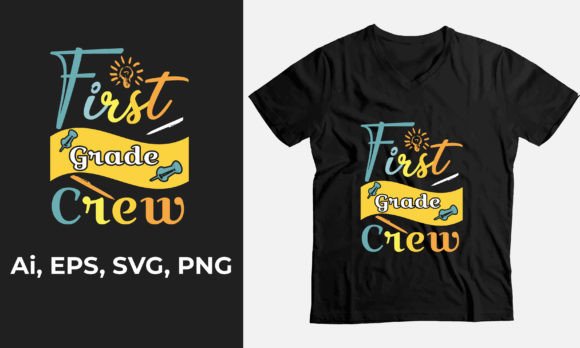
At its core, this Back T0 School T-shirt Design is built with 100 vector shapes. That means every element—whether the stylized “1st” badge, the playful chalkboard border, or the “First Grade Crew” typography—is mathematically defined, not pixel-dependent. This isn’t merely a stylistic choice—it’s a production necessity. When printing on youth-sized tees (which often require precise alignment across curved seams and varied fabric tensions), raster-based files risk blurring, aliasing, or inconsistent line weights at scale. Vector fidelity ensures crisp edges whether printed at 4 inches wide on a toddler shirt or blown up to 16 inches for a banner or tote bag.
Consider a school PTA ordering 200 shirts: they’ll likely need multiple sizes (XS–XL), two fabric types (cotton and tri-blend), and possibly three print methods (screen printing, direct-to-garment, and heat transfer). A single vector file adapts seamlessly across all those variables—no re-tracing, no resolution panic, no last-minute vendor delays. That reliability is why educators coordinating spirit weeks, small-batch designers launching Etsy shops, and local print shops quoting rush orders all prioritize vector-native assets like this Back to school First Grade Crew t-shirt Custom-shirt design.
File Format Flexibility: Matching Output Needs to Technical Reality
The package delivers four complementary formats—EPS (Illustrator CS6), AI (Illustrator CS6), SVG, and PNG—each serving distinct roles in a modern design workflow:
- EPS and AI files are the production backbone. They retain full layer structure, editable text, and swatch-based color control—ideal for commercial screen printers who adjust ink separations or modify layout for platen size.
- SVG unlocks digital use cases: embedding the design into web storefronts (Shopify, Big Cartel), generating dynamic previews in online customizers, or adapting it for vinyl cutting machines used in craft-based small businesses.
- PNG provides immediate utility where vector support isn’t available—think social media announcements, email newsletters, or quick mockups in Canva. The 4500×5400 px, 300 dpi raster version ensures clarity even when scaled down for thumbnails or enlarged for Instagram carousels.
This multi-format strategy reflects how real creators operate—not in silos, but across platforms and constraints. A homeschool co-op leader might drop the SVG into a Cricut Design Space project for iron-on transfers, while a graphic designer at a regional uniform supplier imports the AI file directly into a prepress workflow alongside Pantone-matched brand guidelines.
Color Editability as a Strategic Advantage
“100 Color Editable” isn’t marketing hyperbole—it describes a deliberate, layered construction. Each shape, text block, and outline is isolated on its own layer or grouped logically, with fills assigned via named swatches rather than hardcoded RGB/CMYK values. That means swapping the primary blue of the “First Grade Crew” banner from PMS 294 to PMS 7472 takes three clicks—not hours of manual recoloring.
This level of control matters most when aligning with institutional branding. Suppose a charter school mandates navy and gold as official colors. With this Back T0 School T-shirt Design, you can globally replace all blues with their approved navy and all yellows with their exact gold—preserving contrast ratios, hierarchy, and visual balance without redesigning from scratch. Similarly, a boutique owner curating a “Back to School Capsule Collection” can rapidly generate variants: pastel lavender for girls’ styles, forest green for unisex options, and high-visibility orange for safety-focused PE gear—all from one master file.
Real-World Applications Across User Groups
Different audiences leverage this design in ways that reflect their operational realities—not just aesthetic preferences.
Educators and School Staff
Teachers building classroom community often use custom tees as low-barrier engagement tools. A first-grade teacher might pair the “First Grade Crew” design with student-drawn name tags scanned and overlaid in Illustrator—turning the base file into a collaborative artifact. Administrators use it for orientation-day volunteers, ensuring instant visual cohesion across grade-level teams without outsourcing logo development.
Small Business Owners and Print-on-Demand Sellers
For entrepreneurs running print shops or POD stores, time-to-market is critical. Having a ready-to-print, fully editable Back to school First Grade Crew t-shirt Custom-shirt design cuts pre-production time by 60–80% compared to commissioning original artwork. One store owner reported using the AI file to create five distinct product variations (short sleeve, long sleeve, raglan, hoodie, and kids’ crewneck) in under two hours—including size-specific adjustments and color-swapped mockups for their website gallery.
Hobbyists and Parent Volunteers
Parents organizing class parties or field trips frequently lack design software fluency—but they *do* have access to free tools like Inkscape or browser-based editors. The included SVG and well-structured layers mean they can change text (“Ms. Chen’s Lions” instead of “First Grade Crew”), adjust spacing for readability, or mute background elements—without touching Bezier curves or compound paths. That accessibility bridges the gap between intention and execution.
Production Readiness: What “Print Ready” Actually Means
“Print Ready” is often misused as a vague reassurance. Here, it signifies concrete, verifiable criteria:
- All text is outlined or embedded (no missing fonts).
- No transparency effects that could cause RIP errors during separation.
- Artboard dimensions match industry-standard garment print areas (12×16 inches centered, with safe zones marked).
- Color mode is CMYK for process printing and RGB for DTG—both versions included where applicable.
- Bleed and trim marks are pre-configured for common screen printing setups.
This attention to prepress detail prevents the most common bottlenecks: vendor back-and-forth about file corrections, unexpected color shifts on fabric, or misaligned prints requiring re-runs. For someone managing a tight budget—like a Title I school allocating limited PTA funds—avoiding even one reprint saves hundreds of dollars and preserves goodwill.
Workflow Integration: From ZIP Extraction to Final Output
The delivery method—a single ZIP archive with direct-extract functionality—mirrors how professionals manage assets day-to-day. No nested folders, no password protection, no proprietary installers. Double-click, extract, and open. That simplicity supports rapid iteration: a curriculum coordinator designing a literacy night flyer can import the EPS into Adobe InDesign alongside photos of student work; a summer camp director can paste the SVG into a Mailchimp template for parent announcements; a freelance designer can drop the PNG into a Figma prototype for client review—all within minutes.
Crucially, the file’s compatibility with Illustrator CS6 (a widely adopted, stable version still used in many schools’ computer labs and small studios) ensures broad accessibility—not just for users with subscription-based Creative Cloud access. That backward compatibility is a quiet but vital form of inclusion.
Design Philosophy Embedded in Functionality
Beyond specs, the Back T0 School T-shirt Design embodies a practical design ethos: clarity over cleverness, adaptability over ornamentation, and utility over trend-chasing. The “T0” spelling (rather than “TO”) isn’t a typo—it’s intentional typographic shorthand that improves legibility at small sizes and adds subtle personality without sacrificing professionalism. The “First Grade Crew” treatment balances childlike energy (rounded corners, friendly weight contrast) with structural integrity (consistent baseline alignment, generous letter-spacing for fabric stretch).
That balance reflects deeper understanding: early elementary education thrives on consistency and predictability. A design that feels both joyful and dependable reinforces the same values teachers instill daily—making it resonate emotionally *and* functionally.
Where to Access and Extend the Design System
This Back to school First Grade Crew t-shirt Custom-shirt design is part of a broader ecosystem available through the Creative Fabric store “Creative T-shirt Designer”. Users consistently report cross-pollination between assets—e.g., repurposing the chalkboard texture from this file as a background for kindergarten newsletter headers, or extracting the star motif for reward certificates. The store’s catalog treats each design not as an isolated product, but as a modular component in a larger visual language for learning environments.
For teams scaling beyond single-grade use, the underlying vector architecture allows clean derivation: duplicate the file, swap “1st” for “2nd”, adjust color accents, and export a new variant—retaining all production integrity. That extensibility transforms a one-time purchase into a long-term design system investment.